Showing posts with label CALI. Show all posts

Wednesday, June 29, 2011

CALI Presentation on The Internet and Learning the Law

Went to the CALI Conference on Law School Computing law week. I was invited by CALI Executive Director John Mayer to be one of ten presenters an the first day's Ignite! Plenary. Every one of the presenters were given the opportunity to talk for five minutes - about ANYTHING. Very fun, but very challenging - its extremely hard to talk for ONLY five minutes about something substantive and make it worth while. But I busted my ass for a month (he e-mailed us exactly four weeks before the day of the plenary), and I got a lot of good feedback on my presentation about the internet, technology, and its effect on law students' study habits and ability to learn the law.

The video of the plenary is available on-line, but the first part doesn't have any audio, and it ran late so the last part didn't get recorded. My part starts right at the thirty-nine minute mark. (Marquette uses MediaSite for their lecture and slideshow capture - a very cool system.)

The text, and the slides, from my presentation and below, after the jump. (At least this is the final draft that I mad more or less memorized, but which I continued to tweak as I practiced it a few dozen times the day before the plenary.) (And its damn near impossible to get the text and the slides the align correctly - Blogspot doesn't let you fully edit HTML if you also use the Compose option.)
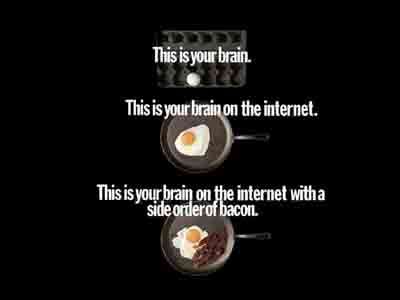
Image Hosted by ImageShack.us


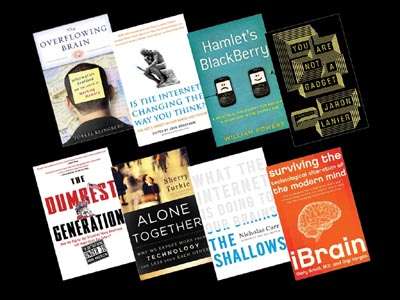
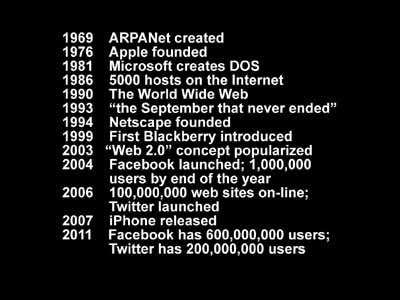
In the past few years, there have beenImage Hosted by ImageShack.us a lot of books and articles critical of our “always on”/“always connected” technology-focused culture. Some of these even suggest that web 2.0 applications, smartphones, all this technology we use, is actually changing the way our brains work, and not in a good way.


But in response to that, others have Image Hosted by ImageShack.uspointed out, no, in order to survive, our ancestors had to be alert to multiple possible threats around them and stay attentive to every sound or movement heard or saw.
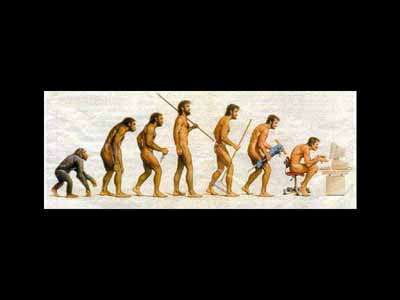


So maybe this drive to regularly check Image Hosted by ImageShack.usour e-mail, Twitter stream, Facebook, RSS feeds, etc., is just an adaptation of early survival mechanisms and the evolution of the internet is just the latest step in mankind’s evolution and so, sure, we’re perfectly capable of dealing with this modern deluge of information.

Well, if that’s true, what else have evolution prepared us for?


For one, our taste buds and appetitesImage Hosted by ImageShack.us evolved to crave fatty, high-calorie foods. So surely we’re also capable of dealing with the modern deluge of readily available, inexpensive food, right? How’s that been working out for us?
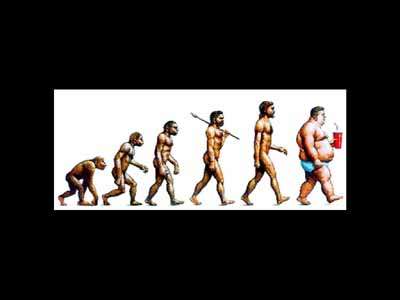


Well, today - thanks at least in part toImage Hosted by ImageShack.us evolution - one-third of adult Americans are obese. Are we going to see an epidemic of “information obesity” soon? Are we starting to see that now?
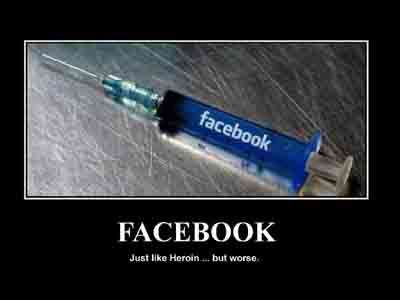


The concept of “internet addiction” isImage Hosted by ImageShack.us debatable, but our brains do have several re-enforcing mechanisms that recent research indicates are relevant to how we work with information today.



When our ancestors were on the hunt,Image Hosted by ImageShack.us or seeking or searching for something, their brains released dopamine - a chemical similar to adrenaline - to help keep them sharp and alert and on edge. Then, when they found what they were looking for - a meal, a mate, whatever - that physical, concrete reward would satisfy that seeking/hunting behavior and their brains would then release endorphins to give them a nice, contented feeling. These endorphins would also balance out the dopamine, take the edge off, bring them down, and they’d feel relaxed and satisfied.

Today, we’re engaging in similar Image Hosted by ImageShack.usseeking/hunting behavior when we use all these on-line information resources and electronic gadgets: dopamine is responsible for that slight rush we feel when we’re on-line, searching on Google, browsing Westlaw results, checking e-mail, reading our Twitter stream, etc. BUT because the objects/targets of these electronic “hunts” are virtual, there is no concrete thing to trigger the endorphin-fueled feeling of satisfaction/contentment. So after we’ve completed our on-line “hunt”, we’re still on-edge from the dopamine rush, but it starts to wane, so to get it back, we’ll search for something else, starting a cycle of seeking behavior we’ll use to try to keep that rush going.

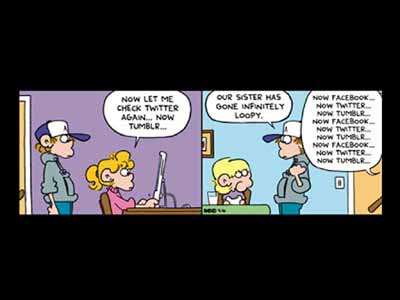
That’s how we’ll say “Oh, I’ll quicklyImage Hosted by ImageShack.us look this up on Google, then get back to what I’m doing” and then forty-five minutes have passed and we’ve gone off on four or five tangents, checked all our e-mail, social media accounts, and maybe we didn’t even find what we were initially looking for.
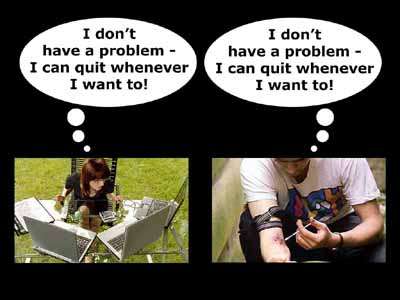


Then the more we do that, the more Image Hosted by ImageShack.uswe crave that slight dopamine rush, the more we want to check our e-mail, Facebook, etc., and soon we’re falling asleep with our Blackberrys on our nightstand and checking them as soon as we wake up, and during the day we start to feel twitchy if we haven’t checked our e-mail, Twitter, Facebook, whatever, for a couple of hours.



So yeah, sure, evolution may have Image Hosted by ImageShack.usequipped us for this behavior, but we are not cavemen any more, and when our ancestors were staying alert, on edge, and paying attention to every possible danger around them, they were not also trying to read eighty pages of Con Law for their next class.



Being able to quickly check and skim Image Hosted by ImageShack.usdifferent resources and monitor multiple streams of information may be a useful skill in some situations, but the mental processes that requires are very different from the processes needed to “learn the law.”



Learning the law requires extended Image Hosted by ImageShack.usperiods of non-distracted focus/concentration on the written word, and you cannot do that with your laptop open next to your casebook while also regularly checking Facebook, Twitter, and e-mail. When you look up from a book to a screen your brain makes several split-second decisions: is that important, do I click on that, should I respond to that? And in just that split-second you’ve disrupted the “deep reading” processes that enable your brain to comprehend what you’ve read and transfer it from your short-term “working” memory to your long-term, retentive memory.
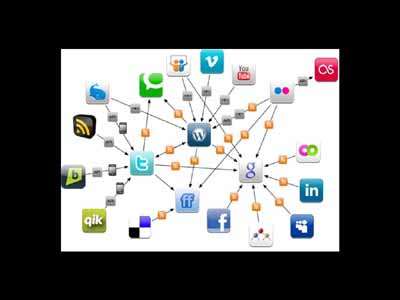
We need to teach our students to use Image Hosted by ImageShack.ustechnology and social media deliberately, in a focused manner, to get the most use out of them: but don’t let these tools use YOU.



Do not let them interfere and distract Image Hosted by ImageShack.usyou from concentrating on the important tasks that NEED your undivided, focused attention.


The best advice for our students may Image Hosted by ImageShack.usbe the same common sense advice for a healthy diet: 1) All things in moderation, 2) know when to say when), 3) push away from the digital buffet - at least when doing your class readings.


Full blog post...

Monday, August 10, 2009

CALI, AALL, Social Media, and the Coming Backlash (Hopefully?)

Feels like I lost late June and most of July to the annual CALI and AALL meetings, and mostly to the bathroom renovation from hell, and now its August and school is ready to start again.

This year both the CALI and AALL meetings will big on Web 2.0 and social media - Twitter, Facebook, etc., etc. But the question I had at the CALI "unconference" session - a big, open free-wheeling discussion about anything - is still unanswered: what mission-critical tasks can these things do for us that we aren't already doing with the tools we've had for a good while now. In law schools, the two primary mission-critical tasks are educating our students to be lawyers and supporting our faculty in their teaching and scholarship.

I've had a lot of fun with Facebook getting in touch with old friends - though learning what they got on any one of the dumb surveys that propagate like weeds on Facebook or that they need help in whatever Mafia Wars task they're doing isn't my idea of "getting in touch", but I've had a few worthwhile exchange with some of my fellow high school alum and its looking like Facebook is going to be very useful in organizing our 25th reunion next year. (And our dog's campaign for the Mayor of New Orleans is making good use of Facebook and is going gangbusters so far.)

And Twitter is a blast during the conferences - very useful at CALI and very snarky at AALL since everyone could Tweet anonymously via @aallsecrets. Yes, there were a few useful Tweets at AALL about simultaneously scheduled programs and some folks posted some useful related resources live during the program, but less so than at CALI, which makes sense given who goes to each.

Two answers have been offered for what these Web 2.0/Social Media stuff can do for us at law schools - one was at that unconference session and involved publicity and I agree about that - one point made at another CALI session was that at the least every law school should have a presence on Facebook and probably elsewhere if only to serve as the official Joe Blow School of Law Facebook page and thus be able to point folks there if they are confused by ad hoc pages created by the school's students. But with the economy in the tank applications are up across the country and luring applicants to your law school is not like marketing sneaker brands where you better be up to date on every social media site and tool. But I do not believe anyone is losing enrollment because their school isn't on Facebook or Twitter or whatever.

The second answer was from a casual conversation at AALL and involved RSS feeds and using them to aggregate/push/whatever articles and blogs and other information to our faculty and students. I'm an RSS agnostic - a thread on ALL-SIS mentioned RSS feeds and one school mentioned a survey of incoming students that said only something like 15% of them used RSS feeds, which sounds a whole lot more accurate to me than the figure I saw stating that 65-70% of all internet users use RSS feeds; I'd believe that 65-70% of all internet users who happen to take a survey about social media probably use RSS feeds, but that survey sure seems like the respondents were self-selected.

RSS feeds may be neat but roping in some blogs as part of your research probably isn't mission-critical to what our faculty and students need. Faculty are going to be most concerned with the 600+ law reviews that Westlaw and Lexis can provide and for which I can set up a thorough, accurate automatic search and have new matching articles e-mailed to them regularly. (And when I last played with RSS, I clicked on the little orange RSS icon on two different web sites - one seemed to look for newsreader software on my computer, and the other asked me to choice between a half-dozen or so news "aggregator" services that it assumed I would have subscribed to. If I can't figure out RSS in five minutes - and, yes, I'm sure its easy once I spend 10 minutes or so with it - its not ready for prime time for the tens of thousands of students and faculty who would need help with even more basic on-line tasks.

It seems to me we're allowing ourselves to be converts to too much of the hype from the marketing types - where some of the hype may indeed be justified - and trying to be "cool librarians" by applying the lingo and mindset to what we do. But screw Clay Shirkey and his contention that "the tradition of one-way authoritative delivery of information is becoming extinct". Yeah, I thought it was neat that Skittles.Com turned their web site into 100% content other people are putting up about their product on social media sites, but in any field besides trying to sell more people your particular brand of stomach-rotting crap candy - i.e., all fields that really matter and strive to accomplish something to oh, I don't know, improve humanity's lot and more us forward as a species, like law, medicine, economics, whatever - questions need to be answered with a significant degree of authority and not cobbled together by people uploading photos to a communal web site or creating a wiki.

Yes, "authoritative" answers to a question may change over time as we learn more about the universe we're in (or, in law, as judges tease out new principles from the cases before them), and the answer to other questions are often really just another question or two, but we, as librarians, are responsible for getting those authoritative answers, or the means of finding those authoritative answers, or even determining that there is no definitive answer, to our patrons.

Are people getting useful answers via Twitter? Yes, I'm sure. But if you ONLY post an important question on Twitter, you're doing a shit job. Law-lib still answers more question on a day that I've ever seen on Twitter. (And please, you're just trying to show off your "cool librarian" cred if you post a survey question on law-lib and they ask for responses via DM .) Twitter is just a weird chimera that seems like chat, micro-blogging, or even e-mail, depending on how you use it but is it game-changing, paradigm-shifting, chose-your-cliche-here, as Shirkey et al says? Shirkey's Ted lecture on the page linked above is mis-labeled there "How Twitter Can Make History" (ummm, no, it can't - and I've ragged on the grandiose claims made for Twitter a few times already so enough said about that). Its a bit broader and is actually called "How Social Media Can Make History" and I'm still not convinced (guess I should listen to the whole thing). Twitter has only made it even more easier (read: more idiot-proof) for people to post stuff on-line, like blogs did a few years ago.

E-mail and the web itself - those were game-changers. All this Web 2.0 and social media hot-topicalism is just the hype-of-the moment. AALL and CALI both had a hell of a lot of sessions about wikis and blogs when those were the new hot things. OK, having students create a wiki in a faculty member's "banana and the law" course may be neat, but sorry if I didn't read about which Federal Circuit is now allowing pleadings in the cases it hears to be submitted via wikis - like I said, I'm RSS feed agnostic so I may have missed that news story.

Blogs were going to make it so much easier for us to reach our patrons but most of the law library blogs I've seen are on-line version of the "books we've acquired this month" newsletters we all used to print and distribute. A blog makes it a lot easier to put that sort of newsy stuff on-line, and at least the students are not throwing away that much paper because they can now not read it on-line instead of not read it when we waste a student worker's time putting a copy in each of their mail boxes. (And I may be baffled about RSS but you can NOT say I don't understand blogs - this post is longer and has more links in it than 90+ % of every other blog I've ever looked at.)

E-mail and the web did revolutionize the way we work and increased exponentially the ways and the ease with which we can connect with our colleagues around the country and around the world. To some extent, Web 2.0 and social media are just tools bringing this more to the masses who couldn't master effective e-mail use and basic html and who, let's admit, don't have that much to say anyway. These new tools aren't paradigm-shifters and in two to three years these annual meetings will have sessions on whatever new tools are being hyped then and which, upon later sober reflection will be seen, like blogs, wikis, social media networks, Web 2.0 collaboration sites, etc., etc., before them, as nifty but non-mission critical ways to get some things done but not the monumental advances they once were thought to be.

I finally had an excuse to put all this down here because I was inspired by an article in the New York Times today, Party On, but No Tweets, about how some social events and some venues are adopting strict no-Twitter, no-cell-phone pics, etc., policies, and people, though uncomfortable at first, are finding its actually enjoyable to just live in the moment and not obsessively share and document the moment. One of the clubs mentioned enforces this by blackballing members if they find Facebook pictures taken during its functions. Another recent article mentioned how membership in Facebook and other sites may have peaked in the under-30 or so demographic. One explanation proposed was that since the over-30 on up to the senior citizen demographics have only recently discovered all this stuff, it was no longer "cool". I don't think kids are going to give up their cell phone texting and Facebook pages, but it soon may be the "cool" trend to actually NOT chat on your phone during half the party and to let your Facebook page go un-updated for a significant length of time. So maybe "backlash" is not what we're going to see in a year or so - maybe "The Coming Ho-Hum" is more accurate.

Full blog post...

Saturday, June 20, 2009

Poster for 2010 CALI Conference

I had thought of this movie and poster earlier because of what year the next CALI conference will be in, but I couldn’t figure out how to make the tagline relevant. But when the location for next year’s conference was announced at the today’s end-of-conference plenary, I had my tagline, but calling it “relevant” is a long stretch. Below the jump...

Image Hosted by ImageShack.us

Pretty dumb, but its just a proof-of-concept. Need a better tagline. “The Year we Make WHAT?” What techspeak or legal education jargon will work with that? Probably nothing. But because it will be the 20th CALI conference, the eventual logo should incorporate something like this:
Image Hosted by ImageShack.us


Full blog post...

2009 CALI Conference is Now History

I know now what our professors are dealing with, since I finally dragged a laptop to a few programs at the CALI conference and when the speaker lost my attention I checked my e-mail, looked up stuff, and tweeted about both the program I was watching and about the tweets from people watching the other programs (I actually have some useful notes and suggested resources from the tweets from people watching the other programs - wow). Based on the many laptop screens I’ve watched at this and other conference for years, this is nothing new (except for the tweeting). But I don’t think I”ll do this during the AALL meeting next month.

But overall I thought the conference was above average in content and usefulness and I have a lot of things to investigate further and tell the faculty and administration about, but the biggest thing I’m taking away from it is that there was no answer to the question of whether Facebook, Twitter, etc., etc., can do something, give our students and faculty something, do ANYTHING critical to our mission of educating future lawyers and supporting our faculty’s scholarly “pursuits” that we’re not doing already with some other set of tools we already have. And in the absence of a “yes” answer, by default the answer to that question would be no.

Oh, and I just thought - there WERE a lot of useful tweets about the content of the conference - but Twitter doesn't archive all tweets forever, right? Surely there's some other website or tool that helps you do that. I don't fell like looking into that now, but I just tweeted about it. Hahahaha.....

Full blog post...

Friday, June 19, 2009

CALI Theme Song?

I’ve always thought that “Information Undertow” by Dada would be a good theme song for CALI.

Hadn’t listened to it in a while, and now I realize its more about media/information saturation in general, but some of the lyrics in the middle come to mind at some many of the CALI sessions I’ve been to over the years:
I picked up a new toy
To get me some quick joy
It's got all the whistles and bells
My friends are all jealous
That's what they tell us
So why do I feel like hell?

I lit up my Apple
Surfed through the shrapnel
Accessed my online babe
She reads Aristotle
Says she's a model
But I've never seen her face


If I got this BLIP.Fm thing to embed correctly, this should be a link to streaming audio of the whole song:

No, not working. I swear I've done this before. Maybe this? -
dada - Information Undertow

Huh, no luck - you can listen to it AT Blip, but via and embedded link, it tries to play and then is listed as "unavailable". But I also found it streamable at Last.fm.

Full blog post...

Thursday, June 18, 2009

Videoconferencing is NOT Necessarily Always Eco-Friendly

In the CALI Conference program today, “Videoconferencing Without Busting Your Budget” - which had a LOT of good information - a clip was shown from a professor talking about how videoconferencing (“VC”) was more eco-friendly than taking a plane to whatever meeting where he needed to speak ("the increase in emissions from the speaker boarding and flying an airplane are significantly greater than the electricity used in VC").

If you have to drive a car to your destination, like another professor in a different clip said then, yes, VC is more green. But unless you’re talking about the alternative of flying your private jet to the distant class/presentation/whatever, VC is not necessarily more eco-friendly compared to air travel because any given commercial airline flight to whatever destination is still going to fly whether or not the professor is on it. If empty seats are available the additional fuel expenditure due to the presence of your body and luggage on the plane probably pales in comparison to the environmental cost of videoconferencing for the 20+ students who will have to fire up their laptops and stayed glued to them for the hour or so you are videoconferencing with them: not all of them will have been on their laptop for that hour anyway, and I would bet that the environmental impact of the extra electricity that it takes for them to be on-line with your VC feed is more than the impact of you being an extra body on the airplane. (And even if that flight was overbooked, bumping passengers to other flights will still only result in a slight marginal increase in the total passenger/baggage mass being flown.)

Full blog post...

Wednesday, June 17, 2009

CALI Conference 2009 & Boulder via Bike

This bike-share thing in Boulder is great - sponsored by some realty company, there are apparently stations where you can pick up the bikes all around town, including at the two hotels for this year’s CALI Conference. So since I got here early this afternoon, I biked all around and after exploring downtown on foot promptly got turned around and forgot where I had locked the bike up. Luckily it was near the farmer’s market (which has more German sausage and beer than the farmer’s market back home) and the Boulder Museum of Contemporary Art (which has some great exhibits as well as free admission on farmer’s market days!).

And, belatedly, I saw the Twitter hash tag for the CALI Conference. Call me clueless/newly clued - I see how that can be useful for things likes this - someone tweeted that there is another farmer’s market on Saturday, and noteworthy stuff going on tonight around town. Excellent! I still think its over-rated as a news tool, but it can be worth using at times.
Full blog post...

Saturday, June 6, 2009

"CALI Graphics", not Calligraphy

This summary is not available. Please click here to view the post.
Full blog post...

Monday, May 4, 2009

Who Leeches the Leechers?: Blog Vacuums

I have a few “google alert” searches set up, mainly to test that service. One search is for anything that links back to my blog here - and I got a result - the first result, I think - that led me to this page:

http://www.howdohowto.com/2009/05/caliorg-kidnapped-by-thai-pirates/

Which is an un-attributed cut-and-paste copy of a post I made in March. HowDoHowTo.Com is a web site that apparently does just that: vacuums up content from elsewhere and posts it on its own website with its own ads around it.

There is a notice on each page here with contact information that says:
Some articles in our site are from internet and for purpose of display only, all rights reserved by the authors. If any of these infinges your rights, please notice us ( mazystar#msn.com #=@) and we will delete it as soon as possible.
Powered by WordPress. Design by Jinxuan. © 2009 How How How !.
It basically admits what they’re doing and contemplates that people will want their stuff removed if it “infinges” [sic!] their rights. I’ll e-mail that person and do just that in a minute.

Their front page changes so much I couldn’t see what the google alert had found, but the link in the e-mail indicated it was the “Thai Pirates” post about CALI, which is funny since the original post was about some web site leeching the CALI web page and posting it more or less as their own. When I did a search for CALI at HowDoHowTo.Com I found several other posts, includuing this one, which I kept as a screen capture because of the abbreviated excerpt from the CALI web page and the banner ad that followed when I viewed it:
Image Hosted by ImageShack.us

This new CALI mission statement warrants a session at this summer’s conference.

Full blog post...

Friday, March 27, 2009

CALI.Org Kidnapped by Thai Pirates!!!

Well, digitally kidnapped - something called the “Thailand Knowledge Center” is leeching the web page and trying to glom onto the CALI bandwagon:

Image Hosted by ImageShack.us
(Click the above image for a full-size copy of the screen capture.)

When I inquired about this - thinking that maybe it was a new partnership with a Thai law school - CALI editor extraordinaire Deb Quintel told me they had no idea what was going on and that they would look into it.

Just one of many strange things about this page (like the mis-spelled “CALI: The Canter for Computer-Assisted Legal Instruction) is the pop-up about web browsers when you first pull it up (this is the Chrome version of the pop-up:
Image Hosted by ImageShack.us

The CALI folks weren’t surprised by the Japanese essay/paper/presentation I found recently with a bunch of citations and references to CALI, American legal education, instructional technology, etc., because CALI Executive Director John Mayer apparently goes over there regularly and talks CALI up to the local legal ed folks there. Should we start working on anime versions of the CALI lessons? -

Image Hosted by ImageShack.us

Image Hosted by ImageShack.us

One of the recent items I noted at CALI.Org - the original, genuine thing, not a cheap, foreign rip-off - is the CALI disc recyling program; sounds good, but my wife and I have our own version of this:
Image Hosted by ImageShack.us
We didn’t make this - a local artist did, but we soon discovered that when exposed to sunlight for any period of time CDs, DVDs, etc, become very brittle so I’m constantly cleaning up and replacing the bits and pieces that crack and shatter and fall in the garden. So a lot of our school’s CALI discs from previous years get used as replacements.

Full blog post...

Monday, March 23, 2009

CALI Lesson: Louisiana Primary Legal Resources

My CALI Lesson Louisiana Primary Legal Resources (membership required, and you have to be logged in to access the lesson), is now on-line at CALI.Org.
Image Hosted by ImageShack.us

The lesson will also be on the forthcoming 2009-2010 CALI DVD-Rom.

This was pretty quick - I turned in my final draft with revisions based on the two reviewers' comment about three weeks ago. But it was the first CALI lesson I wrote directly for the flash interface that CALI now prefers to use for all their lessons. The older lessons converted to the flash format don't look so great, but I took into consideration the layout of the flash lessons' display when I made the graphics for this one and it turned out pretty good.
CALI's Legal Research and Writing advisory group started soliciting state lesson a few years ago. I guess the main appeal for these are to students at law schools in a particular state, or who know they are going to be practicing in a state and want to learn about that state's legal resources. We have enough unique stuff in Louisiana to make for a decent lesson, and I hope students at the four law schools here get some use out of it.

Full blog post...

Monday, March 9, 2009

CALI Legal Research and Writing Lessons are Big In Japan

Well, at least a bunch of the CALI LRW lessons are listed in a table at the end of this paper:

dspace.wul.waseda.ac.jp/dspace/bitstream/2065/6570/1/A05111951-00-054000109.pdf

Here’s an image of the table:Image Hosted by ImageShack.us

And here’s an image of the cover page, with “CALI” highlighted:
Image Hosted by ImageShack.us

I’m not sure what this paper is. It might be something about orientation for Japanese students coming to take classes at law schools here in the U.S. Google has a translation option, but it says this document is too long. But I copied chunks of the first page over to http://babelfish.altavista.com/ and it translates what is apparently the title of this document as:
Role of legal information investigation and the low library in the United States
Since “low library” must be some spelling glitch, I’m guessing that this is about “Legal Research and the Law Library in the United States”. Some of the footnotes are in English, and there are a lot of them about legal education, technology, and distance education, and some of them link to CALI, so its probably about technology and legal education as well.

Full blog post...

Wednesday, December 10, 2008

Never Been #1 on a Top Ten List Before!

In fact, I've never been on ANY Top Ten list before. And, yes, its not really me, but one of my CALI Lessons was the #1 CALI Legal Research Lesson of Fall 2008. This was the list posted on the Law Librarian Blog on December 8th:
Top 10 CALI Legal Research Lessons, Fall Semester 2008
1 Introduction to Secondary Resources by Brian Huddleston.
2 Legal Research 101: The Tools of the Trade by Sheri Lewis.
3 How to Find Case Law Using the Digests by Brian Huddleston.
4 Anatomy of a Case by Brian Huddleston.
5 Updating/Validating Case Law Using Citators by Rebecca Trammell.
6 American Law Reports by Kimberli Morris.
7 Periodicals Indexes and Library Catalogs by C. Andrew Larrick.
8 Introduction to Search Logic and Strategies by Sarah Gotschall.
9 Legal Research Methodology by Wendy Scott & Kennard Strutin.
10 Finding Statutes by Kit Kreilick.
As noted on the Law Librarian Blog, this ranking is from the "CALI Zeitgeist" statistical ranking of all lessons run since August 1st. (Thanks to Joe Hodnicki, who, as the post's author, I presume, extracted the legal research lessons from this master list.)

Instead of ringing my own bell by pointing out what two of the other top five entries on this list were, I'll admit I was lucky to be a participant fairly early in the CALI Legal Research Authoring Project, and so I got to write some of the main lessons. And editor extraordinaire Deb Quentel does a great job of shepherding all us CALI authors through the process, and the legal research editing committee is a thorough and very professional group of law librarians who help push the legal research authors to new heights of excellence.

I'd like to thank the Academy, and my wife, who is my ultimate inspiration and the love of my life, and our Lord Jesus Christ, and I'd like to dedicate this award to all our brave men and women in uniform, and I hope those serving overseas will soon return home safely. I'm King of the World! Let's party until dawn! You like me, you really, really like me!


Full blog post...