Showing posts with label legal education. Show all posts

Friday, December 20, 2019

No, Dear Law Professor, Charles Dickens Didn’t Write A Christmas Story

Though not really central to whatever main point the author was making in this article, this error is one of the funniest I’ve seen recently.
[Full cite: Mary Leto Pareja, Humanizing Work Requirements for Safety Net Programs, 39 Pace L. Rev. 833 (2019)]

Just to be clear, Charles Dickens wrote A Christmas Carol, the timeless classic of holiday redemption, and the 1983 movie A Christmas Story was about the little kid who really wanted a BB gun for Christmas.

And for the record, the source cited in footnote 18 of this article mentions neither Dickens, Oliver Twist, or A Christmas Story. Who did the sub and cite on this article?
Full blog post...

Monday, March 21, 2016

USN&WR Law School Rankings, Color-Coded Changes from 2016 to 2017 Editions

Here is this year’s version of the big color-coded chart that shows the changes in all the reported metrics in the USN&WR law school rankings, from the 2016 Rankings Edition (released in March 2015) to this year’s 2017 Rankings Edition (released March 2016).

Click the title to view the whole thing on-line, or click the download link to save yourself a copy.

As the introductory text on the fist page says, contact me with any errors, questions, or other issues. And I've got some other analyses I might do if I have the time - will upload and publicize the same way.
Full blog post...

Wednesday, March 25, 2015

USN&WR Law School Rankings, Color-Coded Changes, 2015 to 2016 Editions

March 30 Update: A slightly revised version is now embedded below. Apologies to one school for having their two editions' data reversed (they know who they are - thanks for the polite heads-up!), and to Wake Forest for misspelling their name all these years.

(Original post:)

Last's year's color-coded table of all changes to the published metrics in the U.S. News and World Report law school rankings proved to be useful to some folks, so here is this years version:


As the document itself says, contact me for any questions, or if you find any errors. (I spent about half a day chasing down one erroneous number, but didn't see anything else that stood out as looking wildly out of place.)

Also as the document says, because USN&WR uses but doesn't report median LSAT and UGPA, I got those figures from the ABA's Standard 509 Disclosures. I found one discrepancy between those two sets of data, but it doesn't affect that schools' rankings: USN&WR publishes the 25th and 75th percentiles of LSAT and UGPA, though its the median figures they use in their rankings. One school provided a different 25th percentile LSAT score to US News  than they did to the ABA, and one of the statistics people at US News confirm that they indeed got that number from the school - and it was the same as their median LSAT figure - statistically possible if you have a very flat distribution of numbers, but unlikely. Which indicates it wasn't their fault, except that they didn't notice that the school provided the same number for the 25th percentile and median LSAT. More on that in a future blog post, perhaps (I'm waiting to hear back from the associate dean there - but really, it did NOT affect their rankings and was a harmless mistake - it just goes to issues of quality control, verification, etc., etc.)

In some e-mail exchanges last year, I learned about the usefulness of standard deviations - if I have time, I'll make those charts and also upload them here. Using Excel's conditional formatting you can visually represent the standard deviation and easily see if your school has a better (or worse) ranking by a particular metric, compared to your overall ranking. 

And if I figure out how to embed it like I want, I'll post my raw Excel file - its just what U.S. News publishes so they can't complain if I put up a sortable version of their numbers. 
Full blog post...

Tuesday, March 10, 2015

Wikipedia and Case Briefs

Checking something in the computer lab, I saw a student left their Word document open - this is a screen capture of it - a noticed it had a lot of linked text and an option that most Word documents don’t have:


Full blog post...

Thursday, June 12, 2014

Number Crunching for Fun and Profit (Well, for Fun and Coffee, at Least!)

After my post back in March about my color-coded table of the new rankings showing changes from last year to this year, I got a handful of e-mails asking about the raw data. I've gotten good at taking the PDFs of the rankings and turning them into spreadsheets, which is how I made this and other charts, and was happy to share the results of my work.

So imagine my surprise when I got this in the mail:


How nice! There's a Starbucks two blocks from my house, and though I rarely go there, they do have a CD I've been interested in.

So now we have a going rate for my spreadsheets! Ha!

Full blog post...

Thursday, April 10, 2014

Sloppy ABA Employment Statistics

The new ABA job numbers for the Class of 2013 were released yesterday. US News & World Report asks the same basic questions and divides graduates into the same basic categories as the ABA, so these will be the numbers that will make up 14% of next year’s USN&WR rankings and everyone is looking at how their schools’ numbers changed. (Screen caps after the jump).


Full blog post...

Tuesday, March 25, 2014

Law School Rankings: Color-Coded Changes, 2013 to 2014

Ever wonder what it would look like to take the US News & World Report Law School Rankings - all schools, all reported data - and color code the changes from the previous year in green (good change), red (bad change) and yellow (no change)? It would look something like this:

The entire, 29-page PDF of this is embedded below via SCRIBD.Com.

For good measure, I got the median LSAT and UGPA figures from the ABA that USN&WR uses to rank schools, but doesn’t publish, and put them next to the 25th and 75th percentiles of LSAT and UGPA, that they DO publish, but do NOT use to rank schools.

More explanations are on the first page of the document itself.

March 27, 2014 Update: Thanks to Paul Caron of Pepperdine School of Law and TaxProf Blog fame for catching that I had the math backwards in the Overall Score column. Those numbers now indicate +/- correctly and have the correct colors.

March 28, 2014 Update: Well, crap - I didn't know SCRIBD required people to join before they could download the PDF - sorry for that! Anyway, here's a direct link to it:

US News and World Report Law School Rankings: 2013 to 2014 Color-Coded Changes for All Reported Law Schools
And here it is embedded for on-line viewing at SCRIBD:

Full blog post...

Tuesday, March 11, 2014

Where’s the Burning Bush?


And Morses then summoned all legal academia and said "Hear, ye law schools, these Rankings which the Lord Our God, U.S. News, hath given to us this day" ...

Full blog post...

Friday, March 7, 2014

Let the Law School Rankings Games Begin ...

The U.S. News and World Report rankings for law schools will be out next week and one blog post making the rounds is Paul Caron’s “Student Selectivity” ranking of schools based on the new data, or, more likely, an advance copy of the ABA take-off data, which includes some of the same statistics that we all report to the US News folks.

Someone in the comments to that post asked about last year’s data; I had jumped on that so we could see how we did by those two numbers last year, but I decided to post the list for all schools. Prof. Caron’s blog doesn’t go into detail, but, like I say in the document below, I presume he took the median LSAT and UGPA and plugged them into the US News percentages to get a raw number. That’s what I did, so here’s the law school rankings of these stats side by side for this the 2015 and 2014 Rankings. (For anyone reading this who's new to the rankings, U.S. News publishes an "edition" of the ranking titled a year ahead of the calendar year: so we're waiting breathlessly in March 2014 for the "2015 Edition" of the rankings - one of many aggravating little things about working with all this data.)

MARCH 11, 2014 UPDATE

I screwed up the math in my original chart - thanks to Professor Jerry Organ of the University of St. Thomas School of Law for pointing that out. So the new ranking below is my comparison with the correct formula that I should have used to start with - see the explanation before the table for details.


The third leg of the “selectivity” stool - acceptance rate -  is not included in the above. We’ll have to wait until next week for that.


Full blog post...

Monday, December 2, 2013

Hey, Florida State: Forthcoming Articles Are Not “Recent Publications”

Going though a pile of recent law porn, I came across Florida State College of Law's recent “Faculty Additions (PDF)” mail -out. Semantically speaking, the definitions of the words “recent” and “forthcoming” are kind of mutually exclusive, but that doesn’t stop a lot of schools, like Florida State, from piling on whatever they can:

Full blog post...

Wednesday, June 29, 2011

CALI Presentation on The Internet and Learning the Law

Went to the CALI Conference on Law School Computing law week. I was invited by CALI Executive Director John Mayer to be one of ten presenters an the first day's Ignite! Plenary. Every one of the presenters were given the opportunity to talk for five minutes - about ANYTHING. Very fun, but very challenging - its extremely hard to talk for ONLY five minutes about something substantive and make it worth while. But I busted my ass for a month (he e-mailed us exactly four weeks before the day of the plenary), and I got a lot of good feedback on my presentation about the internet, technology, and its effect on law students' study habits and ability to learn the law.

The video of the plenary is available on-line, but the first part doesn't have any audio, and it ran late so the last part didn't get recorded. My part starts right at the thirty-nine minute mark. (Marquette uses MediaSite for their lecture and slideshow capture - a very cool system.)

The text, and the slides, from my presentation and below, after the jump. (At least this is the final draft that I mad more or less memorized, but which I continued to tweak as I practiced it a few dozen times the day before the plenary.) (And its damn near impossible to get the text and the slides the align correctly - Blogspot doesn't let you fully edit HTML if you also use the Compose option.)

Image Hosted by ImageShack.us


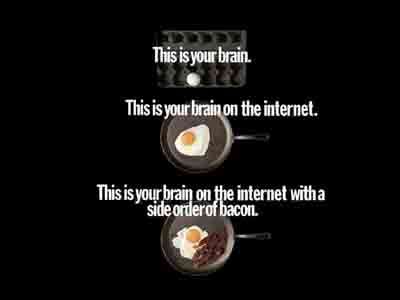
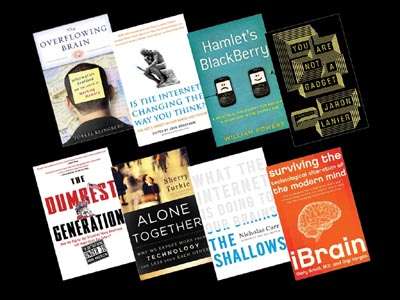
In the past few years, there have beenImage Hosted by ImageShack.us a lot of books and articles critical of our “always on”/“always connected” technology-focused culture. Some of these even suggest that web 2.0 applications, smartphones, all this technology we use, is actually changing the way our brains work, and not in a good way.


But in response to that, others have Image Hosted by ImageShack.uspointed out, no, in order to survive, our ancestors had to be alert to multiple possible threats around them and stay attentive to every sound or movement heard or saw.
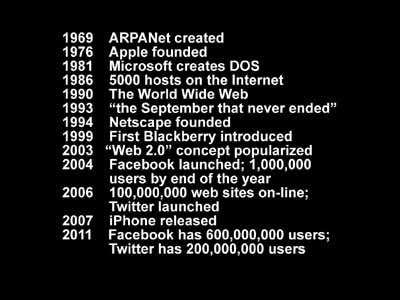


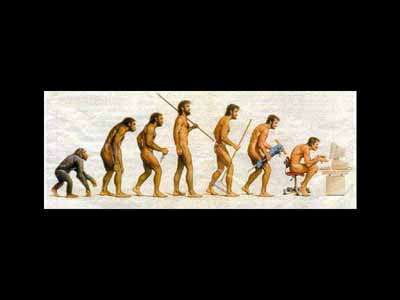
So maybe this drive to regularly check Image Hosted by ImageShack.usour e-mail, Twitter stream, Facebook, RSS feeds, etc., is just an adaptation of early survival mechanisms and the evolution of the internet is just the latest step in mankind’s evolution and so, sure, we’re perfectly capable of dealing with this modern deluge of information.
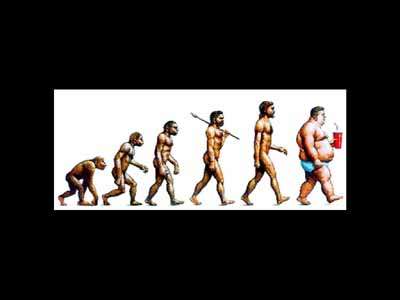
Well, if that’s true, what else have evolution prepared us for?


For one, our taste buds and appetitesImage Hosted by ImageShack.us evolved to crave fatty, high-calorie foods. So surely we’re also capable of dealing with the modern deluge of readily available, inexpensive food, right? How’s that been working out for us?



Well, today - thanks at least in part toImage Hosted by ImageShack.us evolution - one-third of adult Americans are obese. Are we going to see an epidemic of “information obesity” soon? Are we starting to see that now?


The concept of “internet addiction” isImage Hosted by ImageShack.us debatable, but our brains do have several re-enforcing mechanisms that recent research indicates are relevant to how we work with information today.
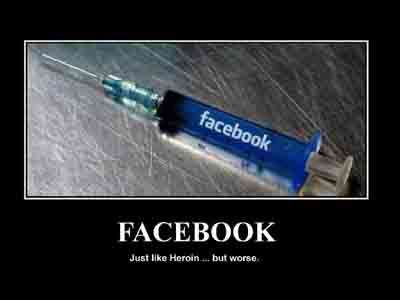


When our ancestors were on the hunt,Image Hosted by ImageShack.us or seeking or searching for something, their brains released dopamine - a chemical similar to adrenaline - to help keep them sharp and alert and on edge. Then, when they found what they were looking for - a meal, a mate, whatever - that physical, concrete reward would satisfy that seeking/hunting behavior and their brains would then release endorphins to give them a nice, contented feeling. These endorphins would also balance out the dopamine, take the edge off, bring them down, and they’d feel relaxed and satisfied.

Today, we’re engaging in similar Image Hosted by ImageShack.usseeking/hunting behavior when we use all these on-line information resources and electronic gadgets: dopamine is responsible for that slight rush we feel when we’re on-line, searching on Google, browsing Westlaw results, checking e-mail, reading our Twitter stream, etc. BUT because the objects/targets of these electronic “hunts” are virtual, there is no concrete thing to trigger the endorphin-fueled feeling of satisfaction/contentment. So after we’ve completed our on-line “hunt”, we’re still on-edge from the dopamine rush, but it starts to wane, so to get it back, we’ll search for something else, starting a cycle of seeking behavior we’ll use to try to keep that rush going.

That’s how we’ll say “Oh, I’ll quicklyImage Hosted by ImageShack.us look this up on Google, then get back to what I’m doing” and then forty-five minutes have passed and we’ve gone off on four or five tangents, checked all our e-mail, social media accounts, and maybe we didn’t even find what we were initially looking for.
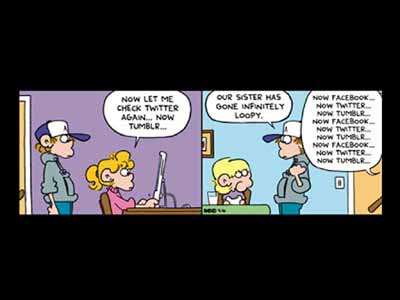


Then the more we do that, the more Image Hosted by ImageShack.uswe crave that slight dopamine rush, the more we want to check our e-mail, Facebook, etc., and soon we’re falling asleep with our Blackberrys on our nightstand and checking them as soon as we wake up, and during the day we start to feel twitchy if we haven’t checked our e-mail, Twitter, Facebook, whatever, for a couple of hours.



So yeah, sure, evolution may have Image Hosted by ImageShack.usequipped us for this behavior, but we are not cavemen any more, and when our ancestors were staying alert, on edge, and paying attention to every possible danger around them, they were not also trying to read eighty pages of Con Law for their next class.



Being able to quickly check and skim Image Hosted by ImageShack.usdifferent resources and monitor multiple streams of information may be a useful skill in some situations, but the mental processes that requires are very different from the processes needed to “learn the law.”



Learning the law requires extended Image Hosted by ImageShack.usperiods of non-distracted focus/concentration on the written word, and you cannot do that with your laptop open next to your casebook while also regularly checking Facebook, Twitter, and e-mail. When you look up from a book to a screen your brain makes several split-second decisions: is that important, do I click on that, should I respond to that? And in just that split-second you’ve disrupted the “deep reading” processes that enable your brain to comprehend what you’ve read and transfer it from your short-term “working” memory to your long-term, retentive memory.

We need to teach our students to use Image Hosted by ImageShack.ustechnology and social media deliberately, in a focused manner, to get the most use out of them: but don’t let these tools use YOU.
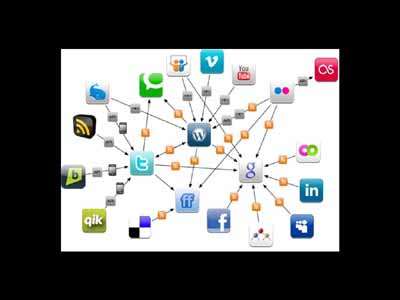


Do not let them interfere and distract Image Hosted by ImageShack.usyou from concentrating on the important tasks that NEED your undivided, focused attention.



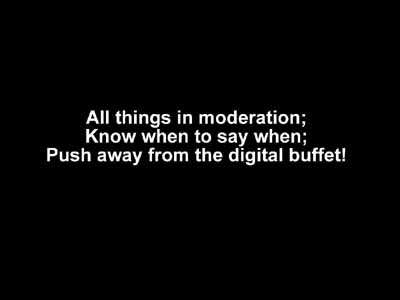
The best advice for our students may Image Hosted by ImageShack.usbe the same common sense advice for a healthy diet: 1) All things in moderation, 2) know when to say when), 3) push away from the digital buffet - at least when doing your class readings.

Full blog post...

Wednesday, February 23, 2011

Legal Education and Twitter... Jeez

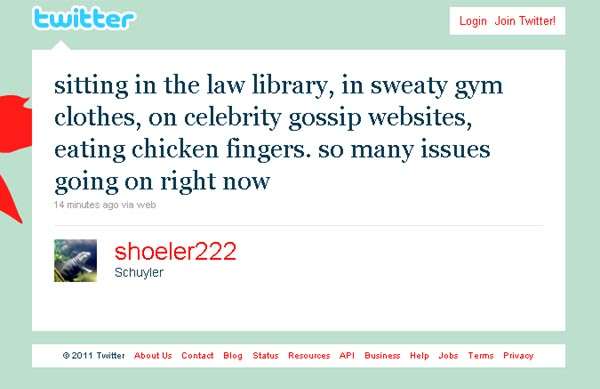
I think this student could be one of ours...

Law student in the law libry in sweaty gym clother browsing celebrity gossip sites

Of course, dumb law student Tweets are like shooting fish in a barrel, but I just happen to point my gun in this person's direction tonight.
Full blog post...

Tuesday, April 27, 2010

Self-Cititillation Syndrome (SCS)

After seeing one too many law review articles where every other footnote seems to cite to one of the author's earlier articles, I think I found the term to describe this: Self-Cititillation Syndrome ("SCS"). Definition: "the propensity of some law school professors to overly cite to their own earlier published works", from "cititillation", "the excessive pleasure taken in seeing someone else cite to your own article or other publication".

Possible usage:

"Yes, its a good article, but he better be careful - he comes close to excessive self-cititillation a few times."

"I had to stop reading after two pages because she kept self-cititillating herself."

"There's nothing wrong with a little self-cititillation. I mean, everyone does it. Just do it in moderation."

Full blog post...

Monday, March 8, 2010

Professor Kingsfield's Secret

How did Professor Kingsfield maintain his sharp legal mind throughout his career? The answer is revealed in one of the episodes of the Paper Chase television show (which I've been plowing through recently):

Yes, Gilbert's Law Summaries! Not once, but twice:

In this episode (Season 1, episode 6, "Nancy", with guest star Elyssa Davolos, playing the titular, this-episode-only girlfriend of Hart), he's seen carrying a Gilbert's around!

Obviously, Kingsfield doesn't need to consult Gilbert's for Contracts, and if you zoom in on the first picture, you can sorta make out the title and see he's boning up on constitutional law:

Perhaps he finally got tired of the statute of frauds, the speluncean explorers, and all that crap and wanted to teach Con Law for a change?

Full blog post...

Sunday, January 24, 2010

Law School Faculty and On-Line Course Outline Repositories

I don't think our faculty are too much behind the curve when it comes to how law students are using the internet these days, so hopefully faculty at other law schools would be just as surprised to learn that there are web site where students can post and download outlines for their courses.

One of our professors posted a message to the faculty e-mail list that noted this:
Hello all,

I just ran across a site offering outlines based on Loyola Professors'
courses for sale. Here is the link:
http://www.outlinedepot.com/schooloutlines.aspx?schoolid=78

Would this explain why, I am sometimes under the impression that some
students anticipate my questions, eagerly volunteer answers which sometimes,
and to their dismay, call for some tweaking on my part?

Doesn't this practice raise some intellectual property issues?

[Name Redacted]

Its a slow day at the reference desk since its early in the semester, its a gorgeous Sunday afternoon, and especially since the Saints are about the kick the Vikings' ASS in the first NFC championship that the Saints have ever hosted at home in the dome (I'm leaving early to go watch, DUH!), so I spent some time composing the following reply and posted it back to the faculty list:
[Name Redacted] (and everyone else),
This web site is indeed an amazing trove of outlines from/for our students. If the faculty here weren’t aware of these sort of sites, your message is a definite wake-up call. But the internet has really only made the sharing of these outline more efficient - I think we all knew long ago that these things were shared and passed down from class to class in paper longer before centralized web sites like these were available (when I graduated law school in 1995, we were still, uhhh, I mean my FELLOW STUDENTS were still swapping outlines via xerox machine).
The intellectual property issue here is an interesting question, but one that I don’t think would help to stop anything like this. (I presume you don’t mean the IP issue of the students sharing their outlines on-line with each other, but of the possible IP issues of the students’ outlines of your law school courses existing on-line at all.) Hypothetical: if a student surreptitiously RECORDED a class lecture (easy to do technologically - all those laptops students use in class have decent built-in omni-directional microphones that they could be using) and posted it on-line, that would be an unauthorized use of your classroom “performance” and would very likely raise some serious IP issues.
But a student’s outline that they wrote him/her-self would most likely be considered, as I understand the law, a derivative work of a professor’s class lectures, the casebook, any other readings the student may have done, discussions with classmates, etc., etc., and would most likely NOT be a successful target of any copyright or IP suit.
At a CALI conference a few years ago there was a presentation by a law student (U. Cincinnati, I think) who went beyond the idea of distributing outlines of his classes on-line: he took his class notes, the readings, etc., and created his own podcasts - audio files that he distributed on-line - that consisted of his own lectures/discussions of the material covered in his classes. He was essentially creating his own on-line courses based on what he was learning in class (and he said he had 50,000+ people downloading and, presumedly, listening to these podcasts). BUT, before his first year of law school started, he met with each of his professors and told them of his plans - he wasn’t asking PERMISSION because he already had a good idea of what the law in this area was - and only one of his professors had any qualms about it, and, ultimately, there were no efforts to stop him from what he was doing and by now, I think, he probably has an entire law school education’s worth of podcasts on-line.
Having these outlines on-line just changes the scale of what our students already had available to them: the internet long ago made the exchange of all manner of information and data much easier. And, yes, this is probably why more students these days may seem to anticipate your lines of discussion and questions in class but, again, its really just a change of scale from fifteen years ago when students had to physically exchange floppy discs containing course outlines that they had written or that they had obtained from upperclassmen.
The bottom line, I believe, is that dealing with this situation as an IP issue would be a distraction from dealing with it as one of pedagogy.

I'm curious to who will be the first person on our faculty to say, no, there ARE serious intellectual property issues with students sharing their outlines on-line.

Full blog post...

Friday, October 23, 2009

Leading - and TEACHING - by Example

One of my biggest pet peeves working with law students is a form of academic dishonesty that is some cases falls short of plagiarism but in some cases definitely goes over the line. At the least, its misleading and misrepresents the students' work. I find a few students each year doing this, either in the papers they're writing for seminars or for the journals, or in the articles the law review and journal staff are sub-citing.

Students can usually find a couple of relevant articles on Westlaw to get themselves started, maybe even a few good books on the subject, but if they find a good discussion or point about an additional case or some other resource - “Source 2” - in an article or book - “Source 1” that they’re reading, they'll often just cite to Source 2 without including an intervening "as cited by" or "as discussed in" citation to Source 1.

It is perfectly acceptable and the Bluebook provides rules for using “as cited by” or “as discussed in”, and if that Source 2 is really obscure or too hard or prohibitively expensive to track down, that’s what you do. But when you DON’T do this and just crib whatever Source 1 said about Source 2 and pass it off as your own research by citing to Source 2 as if you actually found that resource and read it, you’re mis-representing your work. That, to me, is plagiarism, though maybe of a lesser sort than copying an article’s language verbatim and not attributing it.

To make it clear - in case all this “Source 1" and “Source 2" is too confusing - here’s the example I came across recently, with dummy text and citations in place of the real things. This is the case a patron asked me to find:
Frenkel v. Ministry of Corpuscles, No. JK9817-03 (Fred. H.Ct., 1998)
This request came to me by e-mail, and the patron says its unpublished and he’s looked on Westlaw and Lexis and its not there (he had a list of several cases like this he needed). So I poked around and found a few references to it in some law reviews, including this one from the Topschool Journal of International Law:
As the Fredonia High Court said in Frenkel v. Ministry of Corpuscles:

The essence of undulations is that they should be ... a measure of the loss of highhandedness.

Frenkel v. Ministry of Corpuscles, No. JK9817-03 (Fred. H.Ct., 1998) (unpublished opinion), in Jones and Spurious, Law and the Way of the Untoward (2003).
Yes, its unpublished, but it was apparently re-printed in some treatise, which we have, so OK, happy ending - the patron can cite to the case in this book like the Topschool Journal author did.

But, curious about the general availability of Fredonia case law, I googled the case and find several other references to it, including this one:
As the Fredonia High Court said in Frenkel v. Ministry of Corpuscles:

The essence of undulations is that they should be ... a measure of the loss of highhandedness.

Frenkel v. Ministry of Corpuscles, No. JK9817-03 (Fred. H.Ct., 1998).
Wow, that looks familiar. Long story short, the punchline is that this wasn’t a student patron: the list of cases I was asked to find came from a junior professor who busies himself helping to shape the next generation of lawyers and the second cite above, the one I found through google, the one WITHOUT the Jones and Spurious treatise cite, is from SSRN and is his “accepted paper” from a top 50 law school journal that is publishing his article. So he needed me to find these obscure cases because the law review staff is sub-citing his article and needs copies of them, including Frenkel.

But how did our intrepid author find it in the first place if he needs me to get a copy of it? By reading the article by the author who ADMITTED he found the Frenkel case in the Jones and Spurious treatise. But not only has our junior faculty cribbed from Jones and Spurious, he’s blatantly plagiarized the summary of the case from the Topschool law review author, same exact quote, same exact ellipses, etc., etc.

So if the faculty pull this shit, we can’t be surprised that our students plead ignorance about similar stunts.

Now I have to go play diplomat and say “um, maybe you should cite to the law review where YOU found the Frenkel case, or to the treatise where THAT author found it”. I love my job, I love my job, I love my job....

Full blog post...

Saturday, May 16, 2009

Law School Graduation Cartoon

In honor of law school graduations here at Loyola New Orleans and everywhere:
Image Hosted by ImageShack.us

(This scan wasn't so good, so I cleaned up the caption; the name of the building is "Norton School of Law". I wish I had the full source information for this, but I don't have the issue date for this cartoon; I'm trying to find it, but its not a big priority.)
Full blog post...

Wednesday, April 8, 2009

200 198/199? Law Schools Redux

Two weeks ago I wrote about how I was surprised at the latest Annual Report of the ABA Consultant on Legal Education (you can only buy it at that link - they do NOT have it on-line!) and their trumpeting of “Marking a Milestone: 200 Accredited Law Schools”. My own count that I do for a on-going law librarian survey only had 198 law schools: the ABA counts the JAG school and I didn’t, but the bigger difference is that for the first time the ABA counted Widener as two law schools, not just one school with two campuses. The previous annual report counted Widener as one law school, as, presumedly, it had been counted since its second campus was approved by the ABA back in 1988. (Thomas Cooley is still counted as one law school with three campuses.)

I swapped e-mail with the relevant people - the Dean at Widener and the ABA Consultant himself. Since neither explicitly said I could - or could not - quote their responses (even though I asked them both about that), I’ll just summarize what they said.

The Dean at Widener said it was one law school with two campuses, and that she was the Dean of both. The Consultant said that because the two had different curricula, different clinical opportunities, and, according to him - though the Dean didn’t confirm this - different faculty tenure processes, it was really two schools.

I specifically asked why this change was made this year, and asked both the consultant and the Dean whether some radical change was made that warranted counting Widener as two law schools for the first time, and neither indicated that some recent change in Widener’s administration, or in anything, had occurred. The consultant said that listing Widener as one school with two branches was not acceptable to the administration, but he didn’t indicate when I asked whether he was referring to the administration of the law school(s) or of Widener University.

As I mentioned in the e-mail to the consultant, of course the ABA gets to have the final word in this, and he said a decision had to be made and that for their purposes they decided to list Widener as two schools. To me it seems that the only purpose for making the change now at this point in the history of the ABA Legal Education Section was so that they could create this Milestone and Mark it now instead of in another year or two when the next round of new law schools are provisionally accredited.

The question of whether the JAG school should be counted as one of the 200 law schools when its not a J.D. - granting institution is something I’ll leave for another day. Would it take a FOIA request to get their self-study report?

Full blog post...

Friday, March 27, 2009

CALI.Org Kidnapped by Thai Pirates!!!

Well, digitally kidnapped - something called the “Thailand Knowledge Center” is leeching the web page and trying to glom onto the CALI bandwagon:

Image Hosted by ImageShack.us
(Click the above image for a full-size copy of the screen capture.)

When I inquired about this - thinking that maybe it was a new partnership with a Thai law school - CALI editor extraordinaire Deb Quintel told me they had no idea what was going on and that they would look into it.

Just one of many strange things about this page (like the mis-spelled “CALI: The Canter for Computer-Assisted Legal Instruction) is the pop-up about web browsers when you first pull it up (this is the Chrome version of the pop-up:
Image Hosted by ImageShack.us

The CALI folks weren’t surprised by the Japanese essay/paper/presentation I found recently with a bunch of citations and references to CALI, American legal education, instructional technology, etc., because CALI Executive Director John Mayer apparently goes over there regularly and talks CALI up to the local legal ed folks there. Should we start working on anime versions of the CALI lessons? -

Image Hosted by ImageShack.us

Image Hosted by ImageShack.us

One of the recent items I noted at CALI.Org - the original, genuine thing, not a cheap, foreign rip-off - is the CALI disc recyling program; sounds good, but my wife and I have our own version of this:
Image Hosted by ImageShack.us
We didn’t make this - a local artist did, but we soon discovered that when exposed to sunlight for any period of time CDs, DVDs, etc, become very brittle so I’m constantly cleaning up and replacing the bits and pieces that crack and shatter and fall in the garden. So a lot of our school’s CALI discs from previous years get used as replacements.

Full blog post...

Tuesday, March 24, 2009

President Obama: Law Libraries are Cool!

Well, its not a direct quote, and he wasn’t president then, but a posted picture on PunditKitchen has a photo of the President when he was younger, and those definitely are case reporters on the shelves.

barack obama


Probably taken for the Harvard Law student newspaper or something? Unless its from U. Chicago, when he was a lecturer at the law school there (1992 - 2004, I believe I read recently). Either way, yes, he - and law libraries - are definitely cool.

Ah! It was from his Harvard student days - one of the hits on the first page of results when searching Google image for

obama “law library”

is this one:


from this story in the Boston Globe from January 28, 2007.

Its from the same photo shoot, and the caption indicates it was from Harvard. But the phrase “law library” in the article isn’t about the picture:
In the fall of 1989, when Obama returned to campus for his second year, students were protesting the lack of minority law school faculty. They staged sit-ins in the law library, camped outside the office of Dean Robert C. Clark, and carried signs that read "Diversity Now" and "Homogeneity Feeds Hatred." (Emphasis added)
Sit-ins in the law library? They didn’t cover how to handle that when I was in library school. (And couldn’t the smart kids at Harvard law have thought up a slogan more catchy than “Homogeneity Feeds Hatred”?)

Good thing the law library at Harvard has all these great chairs:
Image Hosted by ImageShack.us


(From a great presentation at the 2000 ABA Bricks and Bytes conference by Terry Martin, director of the Harvard Law Library.)

Full blog post...